.svg)
Age verification used to sit mostly in compliance conversations. Now it shows up in product reviews, risk committees, and partner discussions.
That shift is happening for a simple reason: mandates are expanding, and users are more privacy-aware than ever. The UK and Australia have already raised the bar. Brazil is moving in the same direction, and many other regions are expected to follow. The trend is clear: For industries from social media and video gaming to physical retail and ecommerce, age assurance is becoming part of market access.
At the same time, one tension keeps repeating across teams: people support safer online experiences, but confidence drops when verification feels like centralized biometric collection.
This is where many strategies miss the mark. They treat trust as a messaging problem. In practice, it is a system design problem.
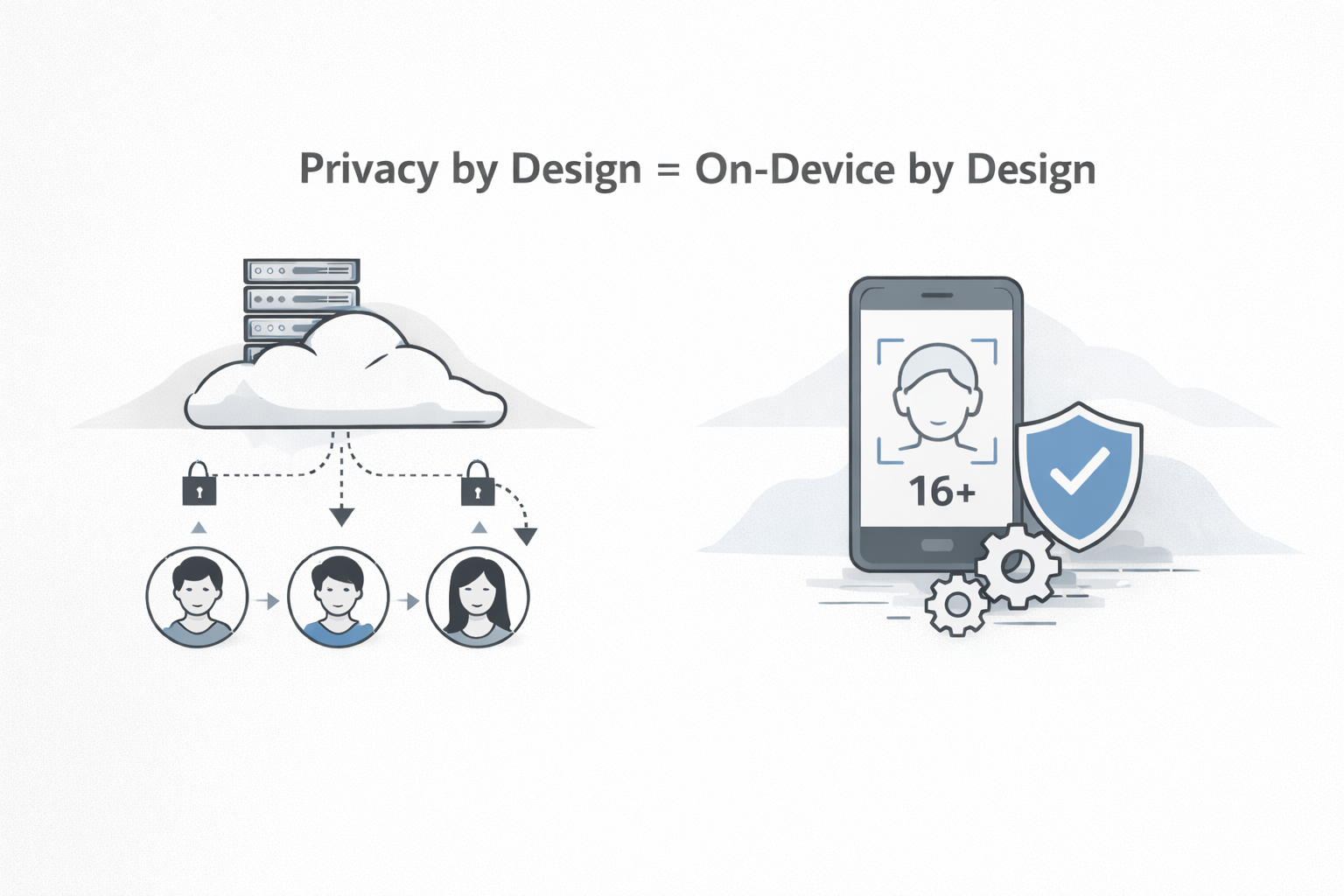
When face data is processed in cloud infrastructure, users are effectively asked to trust a long chain of promises: where data moves, what is retained, when deletion happens, and how exposure is prevented. Even with strong controls, the burden is still on centralized custody.
When processing happens on-device, that burden shifts.
FaceAssure is built around on-device facial age estimation, with privacy-preserving age verification and no transmission of biometric data to servers. This is the core architectural decision that determines trust posture at scale. This is why our customers choose us.
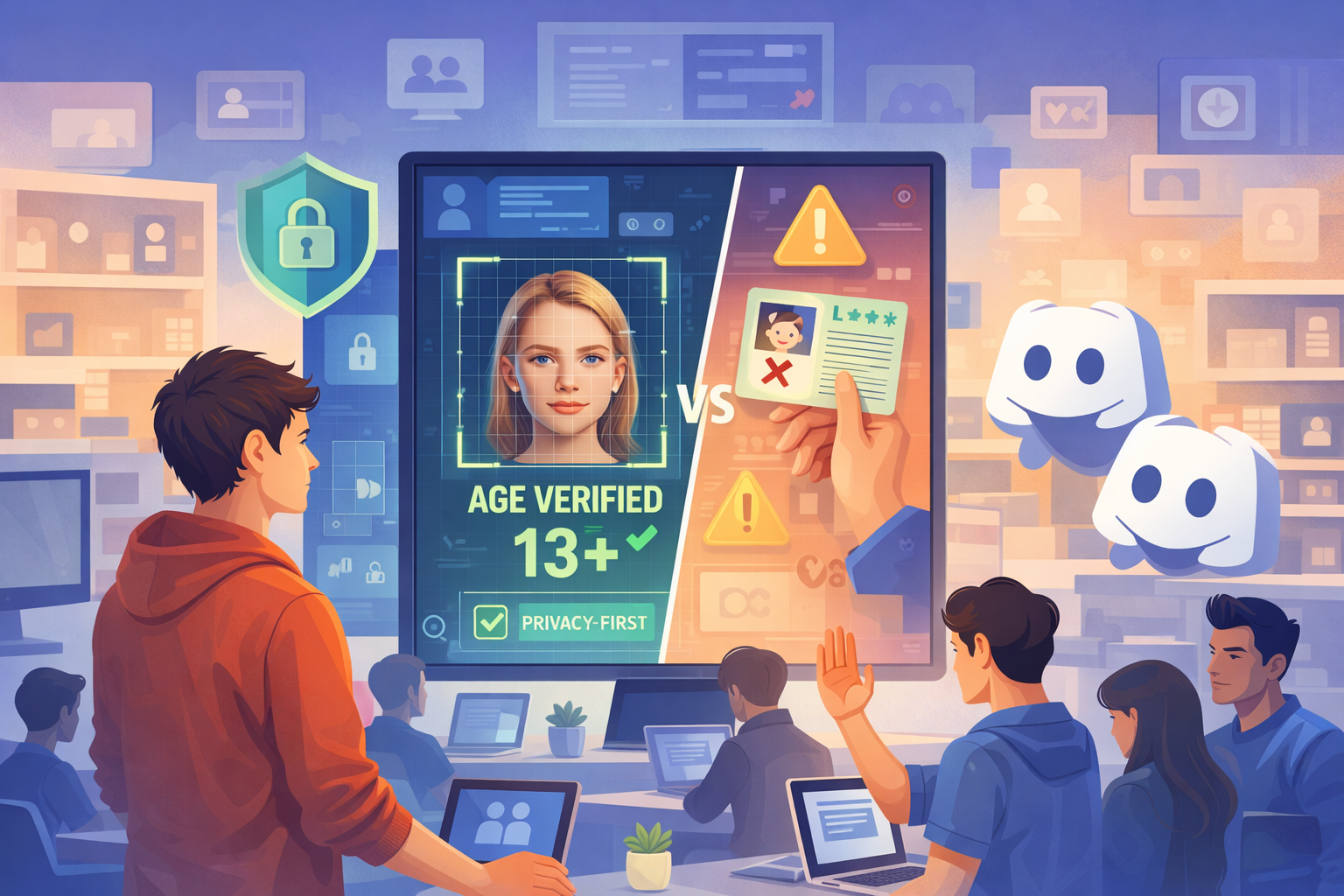
This direction is now being reinforced by platform behavior. Discord has made on-device facial age estimation a formal requirement. It is a clear market signal about where age assurance expectations are heading.
For executives, the implications are practical:
- compliance readiness improves as regulatory requirements expand
- conversion risk is reduced when trust friction is lower
- partner conversations move faster when data flow is straightforward
- brand position is easier to defend when privacy claims match architecture
None of this requires dramatic language. It requires clear choices.
If you are evaluating age assurance now, start with two questions:
- Where is biometric processing performed?
- Is server-side biometric retention required anywhere in the normal flow?
Answers to those two questions usually reveal more than pages of policy language.
Age verification will keep evolving, and regional requirements will keep tightening. The teams that will adapt fastest are the ones choosing architectures that scale across legal contexts without asking users for blind trust.
That is the case for on-device, privacy-preserving age verification. And that is the model FaceAssure is built for. This is the hill we will die on.
Start with a demo request on FaceAssure Main Page, or reach out directly on LinkedIn: Deepak Tewari and Onur Yürüten